
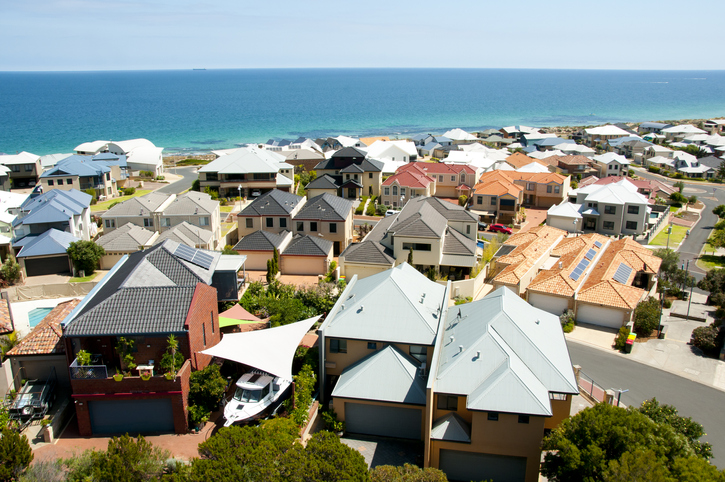
One of the hottest property topics right now is the ability to accelerate the building of new homes to keep up with demand generated by an increasing population that features a 450,000+ annual immigration intake.
The lack of supply, which industry data suggests is 20% below the five-year average, is a key reason for property prices continuing to rise despite the reluctance of the Reserve Bank of Australia (RBA) to cut interest rates below its current 3.6% level.
If you’re an owner with no ambition to move, this is a pleasing scenario that should continue to see the value of your property rise through 2026.
The property portal Domain predicts a 6% increase over the next 12 months, while Westpac is more bullish at 9%. At the lower end, CBA thinks values might creep up 4%.
However, if Australia doesn’t speed up the building of new homes, especially apartments, then supply will become even tighter and that could result in prices moving further north.
The latest data from the Australian Bureau of Statistics (ABS) doesn’t bode well for those arguing that prices need to be contained to improve affordability.
The ABS says the total number of dwellings approved fell 6.4% in October to 15,832.
Its head of construction statistics, Daniel Rossi, said: “The October fall in dwellings was driven by a 13.1% drop in approvals for private dwellings, excluding houses. Private sector houses also fell 2.1% to 9,251 dwellings.”
Private sector house approvals fell in most states. Victoria had the largest fall, down 6.6%. The exception was Queensland, where private sector house approvals rose 2.7%.
Nationally, house approvals were just 1.3% higher than in October 2024.
Private sector dwellings excluding houses fell 13.1% to 6,253 dwellings after a 25% September gain. The result was 3.3% lower than one year ago.
Approved apartments fell 39.2% to 3,397 dwellings following a rise in September to 5,589 dwellings. Townhouse approvals rose 16.4% to 3,075 dwellings. That’s 13.7% higher than the average over the past 12 months.
The value of total buildings approved fell 2.8% to $16.16 billion.
In contrast, the value of non-residential buildings rose 11.6% to $7.13 billion. The result for commercial property is 32.4% higher than one year ago.