
Why This Matters
Late summer shows a home exactly as it lives. When it’s still warm out, comfort problems are hard to hide: stuffy rooms, hot upstairs bedrooms, drafty windows, or an AC system working overtime. That matters because heating, cooling, and water heating make up nearly half of the average household energy bill. Efficiency isn’t just a utility-bill issue — it’s a comfort, maintenance, and lifestyle issue.
It also matters to buyers more than many homeowners realize. There is growing buyer interest in energy efficiency, with agents noting that efficient windows, doors, and siding are among the top “green” features clients ask about. Efficiency is one of the few home features that feels practical rather than flashy — it speaks to comfort now and savings later.
What Buyers Notice First
Most buyers aren’t thinking about insulation levels or duct design when they walk through a house — they’re noticing how it feels. A comfortable living room but hot bedrooms, road noise, or uneven air from room to room are real quality-of-life signals. Common complaints like hot or cold spots, drafts, excess dust, window condensation, and odd noises — all easier to spot in late summer, when the home is under cooling stress.
There’s a financial dimension too. A home that stays comfortable without visible strain suggests lower ongoing costs and fewer near-term repairs. Research has shown that energy-efficiency-rated homes sold for more, on average, than comparable unrated homes — and better-rated homes outsold lesser-rated ones in the same study. That doesn’t guarantee a dollar-for-dollar premium for every upgrade, but it shows documented efficiency can translate into real market value.
The Upgrades That Tell the Strongest Story
The best efficiency improvements are often unglamorous. Air sealing and insulation are among the most cost-effective ways to boost comfort and performance, and studies show most U.S. homes are under-insulated. Sealing and insulating attics, floors over crawl spaces, and basements can meaningfully cut annual energy bills. R-value — a measure of insulation’s resistance to heat flow — is worth knowing here: higher R-values mean better thermal performance. Buyers may never ask for it by name, but they notice the even, comfortable result.
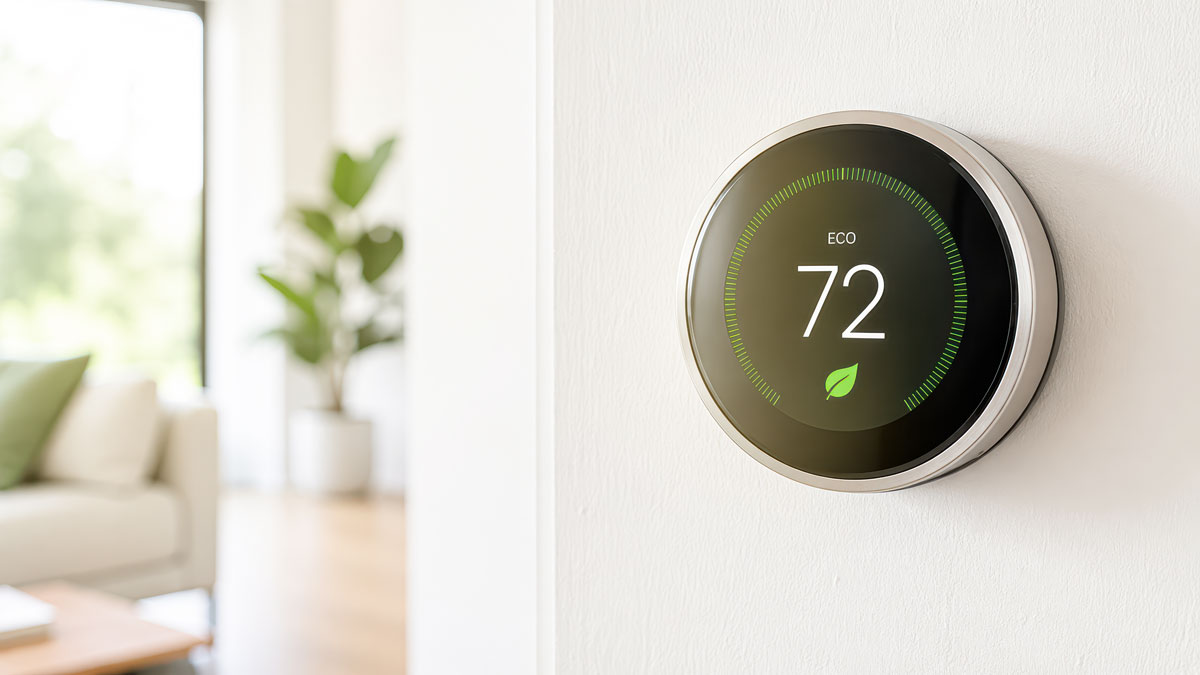
The next layer is equipment and envelope. Sealing and insulating ducts can improve heating and cooling efficiency by as much as 20%, especially where ducts run through attics, garages, or unfinished basements. High-performing windows lower energy bills and improve comfort, while ENERGY STAR-certified smart thermostats are independently verified to save energy — often around $100 a year. If a water heater needs replacing, an efficient model helps too: water heating accounts for roughly 12% of home energy use, and heat pump water heaters use far less energy than standard ones.
A useful rule of thumb: think in layers, not gadgets. A home with a well-sealed attic, solid insulation, tight ducts, and a properly maintained HVAC system will impress more than a house with one flashy upgrade and lingering comfort problems.
Proof Matters as Much as the Upgrade
For efficiency to become a real selling feature, it helps to make it verifiable. A home energy assessment (or audit) identifies where a house loses energy, which fixes matter most, and how they’ll improve comfort and cost.
Documentation gives efficiency a paper trail: the assessment report, utility bills showing patterns over time, receipts for insulation or HVAC work, warranties, and ENERGY STAR labels. The goal, simply, is to make a home’s hidden improvements visible.
Think Like a Future Owner
The strongest energy upgrades are ones you’d want even if you never sold — that’s what makes them evergreen. A first-time buyer may care about predictable monthly costs. A retiree may value comfort and easier maintenance. An investor may focus on lower operating expenses and durability. A growing household may want rooms that stay usable all day. Different priorities, same underlying idea: an efficient home is easier to live in.
That’s why the smartest approach isn’t “add whatever sounds green.” Start with how the home performs in your climate and daily life. A good upgrade plan isn’t about chasing trends — it’s about reducing waste, improving comfort, and solving the problems your home already has.
A Feature That Keeps Working After the Season Ends
A beautiful kitchen can impress buyers. Fresh paint can make a home feel cared for. But energy efficiency does something different — it changes how a home performs. In late summer, that performance is easy to feel, since cooling demand puts comfort, noise, air leaks, and system strain in plain view. When those improvements are well documented, buyers see more than a list of upgrades — they see a home that’s likely more comfortable, more predictable to own, and better equipped for everyday life. That’s how energy efficiency becomes a home’s biggest selling feature, without ever sounding like a sales pitch.
The information provided in this blog is for general informational purposes only and is not intended as tax, legal, or financial advice. We are not tax professionals. Readers should consult their own tax advisor or accountant for guidance specific to their circumstances.