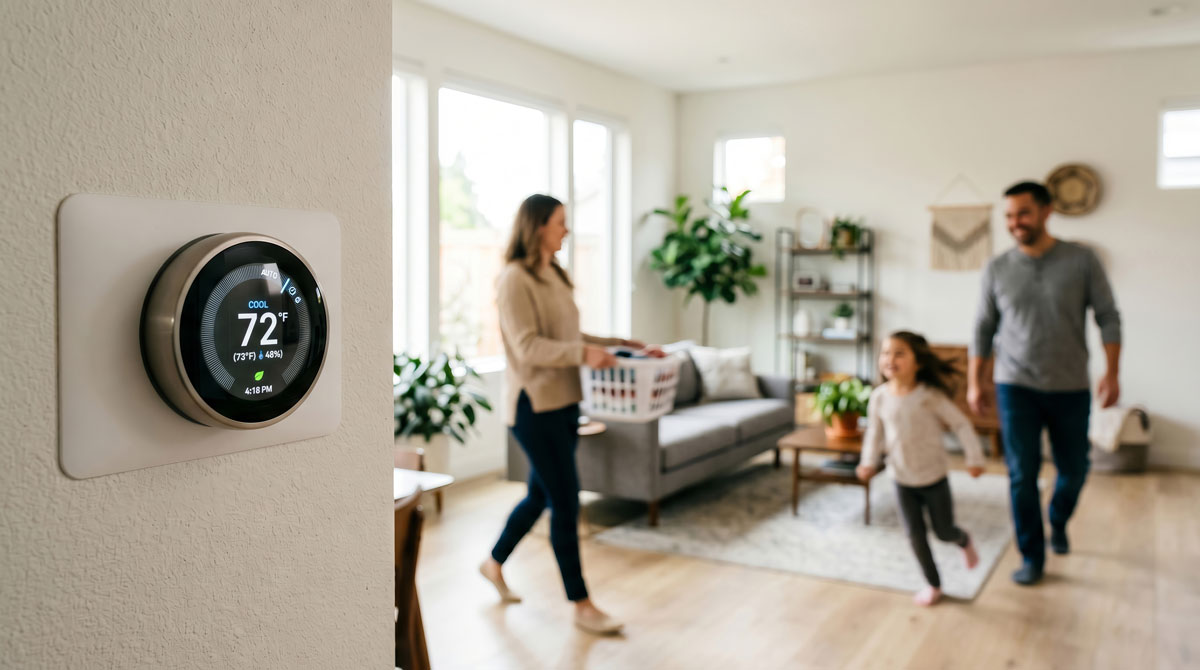
A home’s heating and cooling system affects comfort, energy use, running costs and potentially its appeal to future buyers. Replacing or upgrading it is therefore a decision worth considering carefully.
October is a useful time to review your system. In spring, many households are moving away from winter heating and preparing for warmer weather. Checking your system now can help identify issues before summer demand increases.
The best system is not necessarily the newest or most expensive. It is the one that suits the home, local climate, household needs and long-term plans for the property.
Start With the Current System
Age matters, but it should not be the only reason to replace heating or cooling equipment. A well-maintained system may remain reliable for years, while poorly maintained equipment can develop problems much sooner.
Watch for frequent repairs, uneven temperatures, unusual noises, rising energy bills, weak airflow or difficulty keeping the home comfortable. These may indicate that replacement is worth exploring.
A qualified technician can also determine whether the equipment is the real issue or whether poor insulation, draughts, leaking ductwork or restricted airflow are affecting performance.
Know the Main Heating and Cooling Options
Homes typically use these common systems.
- Reverse-cycle air conditioning provides both heating and cooling and is available as split, multi-split or ducted systems.
- Ducted gas heating remains common in some cooler regions.
- Electric heaters can suit individual rooms but may be less economical for heating large areas for long periods.
- Hydronic heating circulates heated water through radiators or underfloor systems.
- Wood heaters may suit some regional and rural properties, subject to local regulations and fuel availability.
- Evaporative cooling can be effective in suitable dry climates.
For households considering moving away from gas, reverse-cycle air conditioning may be worth investigating because one system can provide both winter heating and summer cooling.
Understand Energy Ratings
Many air conditioners display a Zoned Energy Rating Label, which shows heating and cooling efficiency across hot, average and cold climate zones.
When comparing systems, look at the rating that best matches your location. Higher efficiency may reduce energy use, but actual running costs will also depend on electricity tariffs, thermostat settings, insulation, climate and how often the system is used.
Make Sure the System Is Properly Sized
An oversized system may switch on and off too frequently, reducing efficiency and comfort. An undersized system may run constantly while struggling to maintain the desired temperature.
Proper sizing should consider floor area, ceiling height, insulation, windows, orientation, shading, room layout and local climate.
When comparing quotes, ask how the recommended system capacity was calculated rather than simply replacing the old unit with one of the same size.
Look at the Whole Home
Heating and cooling performance depends on more than the appliance itself.
Insulation, draught sealing, window coverings, shading, ventilation and ductwork can all affect how much energy is needed to keep a home comfortable.
Duct leakage is particularly important in ducted systems. Heated or cooled air escaping into roof spaces or other unused areas wastes energy before it reaches the rooms where it is needed.
Larger or multi-storey homes may also benefit from zoning, which allows different areas to be conditioned separately.
Think About Summer as Well as Winter
Because October falls in spring, consider how the system will perform during the warmer months ahead.
If both heating and cooling equipment are nearing replacement, assessing them together may create more options. For example, separate ageing systems may be replaced with a reverse-cycle system that handles both functions.
Consider Gas and Electrical Requirements
Homeowners do not necessarily need to replace an existing system with the same type of equipment.
A property with gas heating, for example, may be suitable for electric reverse-cycle air conditioning. However, switching to electric equipment may require electrical or switchboard upgrades.
Factor in installation costs, electrical capacity, local climate, expected usage and any additional upgrade costs before deciding.
Compare Long-Term Costs
Purchase price is only one part of the total cost. Consider installation, energy use, servicing, repairs, warranty coverage, expected lifespan and any electrical or ductwork upgrades.
Government, state, territory or energy-provider rebates may also be available for certain efficiency upgrades, but programs and eligibility can change, so check current schemes before purchasing.
Keep Resale in Perspective
A newer, well-maintained system may reassure buyers by reducing concerns about near-term replacement costs. Keeping warranties, installation records and service history can also help future owners assess the equipment.
However, an expensive upgrade does not guarantee an equivalent increase in property value. Comfort, reliability, efficiency and suitability for the home are usually better reasons to choose one system over another.
Make the Decision With the Full Picture in Mind
A smart heating and cooling upgrade is less about finding the “best” equipment and more about finding the right fit.
By considering the current system, climate, sizing, energy efficiency, insulation, fuel source, electrical requirements, operating costs and long-term plans together, homeowners can make a practical choice that supports year-round comfort for years to come.
The information provided in this blog is for general informational purposes only and is not intended as tax, legal, or financial advice. We are not tax professionals. Readers should consult their own tax advisor or accountant for guidance specific to their circumstances.