
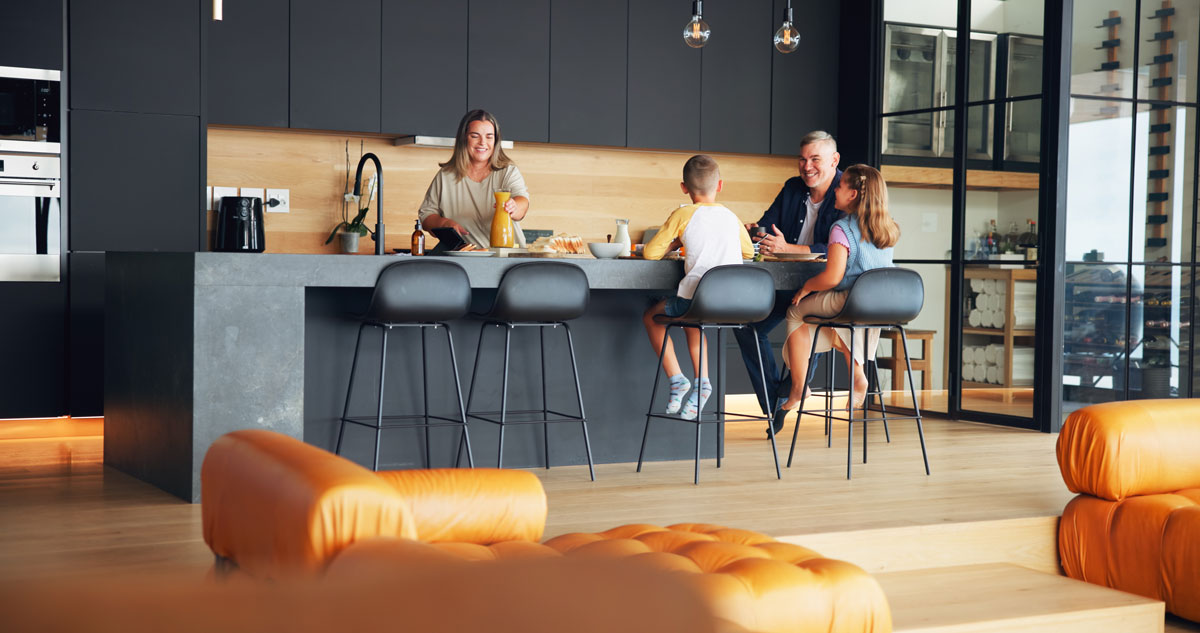
A larger home can look impressive when it is quiet, staged, or mostly empty. Its real strengths and weaknesses tend to show during peak activity: rushed mornings when everyone needs the kitchen, bathroom, and entry at once; evenings when dinner, homework, laundry, pets, and calls overlap; or weekends when guests highlight storage, parking, and outdoor space. Square footage alone is never the full story. While the median new U.S. single-family home is just over 2,200 square feet, buyer research consistently shows that practical features—laundry rooms, patios, garage storage, and a main-level full bath—matter most. People may enjoy more space, but they value space that works.
For buyers, that means judging a larger home by how it handles daily life, not just how it looks online. For sellers, it means understanding how the home functions when fully in use. For owners staying put, it means assessing whether the home supports current routines and future needs.
Layout shows itself when the house gets busy
Peak activity quickly reveals whether a home’s layout reduces stress or creates it. Researchers measure crowding not just by square footage but by people per room and per bedroom, emphasizing that arrangement matters as much as size.
A large home with poor circulation can still feel tight. If the laundry room is far from bedrooms, if the entry clogs with bags and shoes, or if the kitchen layout interrupts movement, extra square footage does little to help. Buyer surveys reflect this: many people want kitchens connected to living areas, but not fully open. They prefer a balance—visibility and flow, with some separation when needed.
In practice, a larger home works best when key routes are short and intuitive: entry to drop zone, kitchen to pantry, laundry to bedrooms, garage to mudroom, living space to outdoors. When movement is smooth, a home feels larger than it measures. When traffic bottlenecks, it can feel smaller than it is.
Bigger homes reveal the true cost of comfort
More space means more to heat, cool, clean, furnish, and maintain. Beyond the mortgage, costs include taxes, insurance, utilities, repairs, and upkeep. Energy use is especially significant: heating and cooling account for over half of household energy use, and larger homes often expose inefficiencies through uneven temperatures or unused rooms that still consume energy.
Efficiency features can make a difference. Buyers consistently value energy-saving elements like efficient windows, appliances, programmable thermostats, and multi-zone HVAC systems. Improvements such as air sealing and added insulation can also reduce costs and improve comfort.
When a large home feels expensive to run, the issue is not always “too much space.” Often it is about how efficiently that space is managed.
Extra rooms matter only if they are useful
Larger homes often include bonus rooms, lofts, or formal spaces. During everyday use, their value depends on flexibility. Research shows that buyers prioritize features that reduce friction—storage, functional workspaces, and adaptable rooms.
A room that can shift from nursery to office to guest space has lasting value. A space with a single narrow purpose may look appealing but contribute little to daily life. This matters for all types of households: first-time buyers growing into a home, upsizers discovering they need better storage more than extra living areas, downsizers seeking efficiency, or investors looking for layouts that appeal broadly.
Long-term livability often outweighs visual impact
Design features like grand staircases or dramatic foyers can impress, but convenience tends to matter more over time. Most older adults prefer to remain in their homes as they age, yet very few homes are designed for long-term accessibility.
Features like a main-level bedroom or flexible sleeping space, a full bath downstairs, and a step-free entry can benefit not just aging homeowners but also guests, families with young children, or anyone dealing with temporary mobility issues. Wider doorways, minimal thresholds, and well-placed handrails improve usability for a wide range of situations.
Safety is also a factor. Falls are a major concern for older adults and can significantly affect independence. While a larger home is not inherently harder to live in, multiple levels, long distances between key rooms, and difficult entries can become more challenging over time.
A simple way to evaluate a larger home
Instead of focusing on square footage, consider these questions:
- Where do people gather or crowd during busy times?
- Which rooms are used daily, and which remain unused?
- Can the home function well with main-level living if needed?
- How much space must be maintained to feel complete?
- Does the outdoor area add usable living space or extra work?
These questions highlight what larger homes reveal under pressure: flow, cost, flexibility, and long-term usability.