
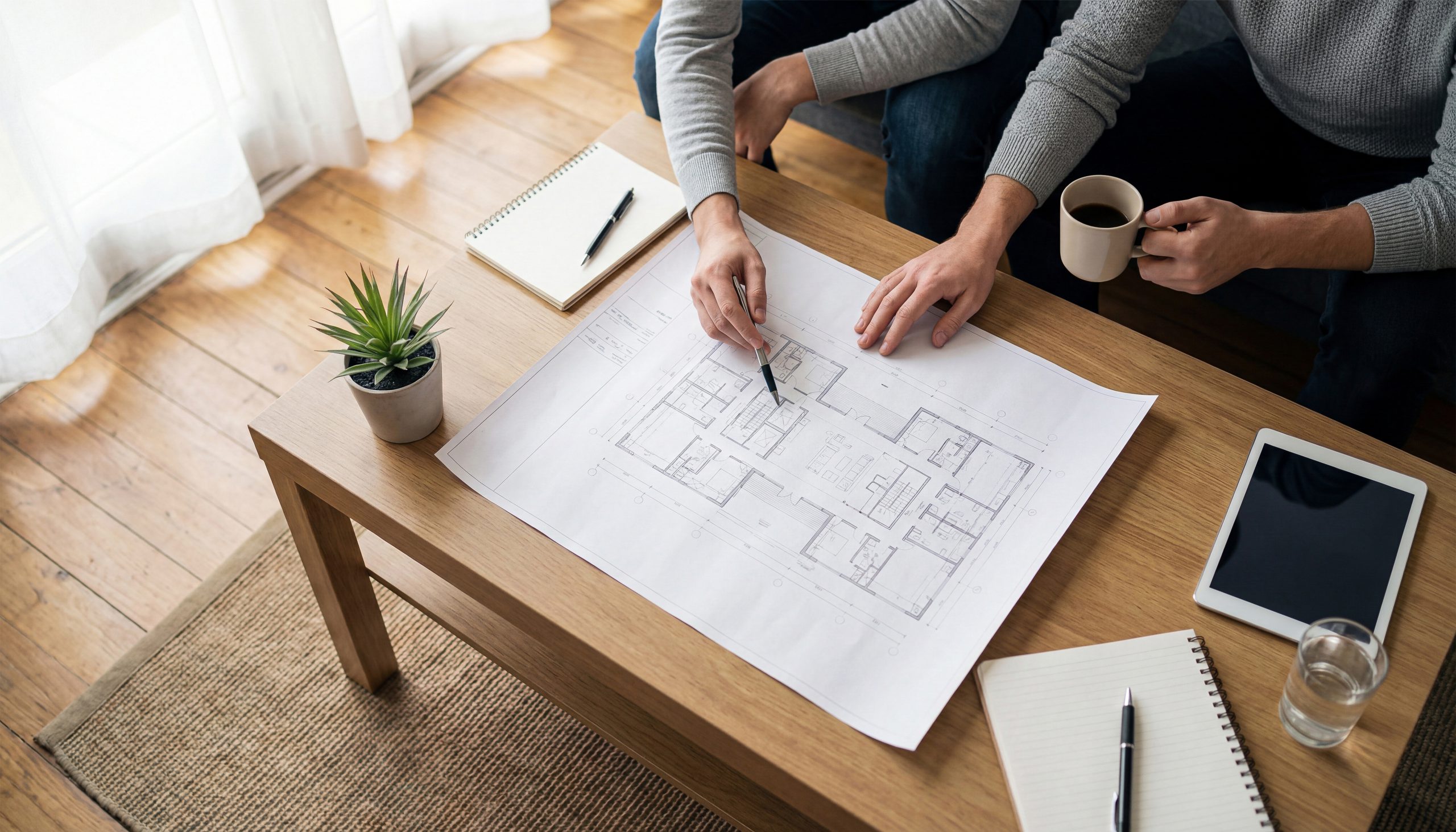
Home projects rarely come with a tidy price tag or timeline. Even a “simple” upgrade can bring noise, dust, tradespeople in your space, and weeks of decisions. That disruption is part of the cost—whether you renovate now, later, or not at all.
Start with the outcome, not the project
It’s easy to fall in love with a project name: “kitchen remodel,” “finished basement,” or “new deck.” A clearer starting point is the outcome you actually want.
Ask: What problem am I trying to solve?
Most home projects aim to do one of four things:
- Protect the home (leaks, failing systems, structural concerns)
- Improve daily function (layout, storage, safety)
- Increase comfort (drafts, temperature swings, noise)
- Help the home fit a life stage (working from home, aging in place, easier upkeep)
Measure disruption like you’d measure cost
Many “worth it” regrets come from underestimated disruption rather than underestimated dollars. Before deciding, picture a normal weekday during construction and consider four factors: time, space, routine, and health.
- Time: How long will the work take, and how predictable is the timeline?
- Space: Which rooms become unusable? Will you lose access to the kitchen, bathroom, parking, storage, or outdoor space?
- Routine: How will you cook, bathe, work, or care for kids or pets during the project?
- Health and safety: Will the project create dust, fumes, or hazards that could affect children, older adults, or anyone with breathing sensitivities?
If you’re buying a home that needs work, a professional home inspection can help separate “must-do” repairs from “nice-to-have” upgrades. Identifying serious problems early can change the scope of your plans—or the purchase decision itself.
A simple rule helps: the higher the disruption, the stronger the reason for the project should be—or the more carefully the work should be phased.
Weigh the payoff in four ways
A smart decision balances what you gain with what you give up during construction. Think about the payoff in four categories.
Safety and durability
Some projects protect the home itself—addressing water damage, electrical issues, roofing, or structural problems. These improvements may not be glamorous, but they help the home remain safe, stable, and functional over time.
Durability improvements can also support energy efficiency and indoor comfort, especially in Canada’s varied climate. Addressing air leaks, insulation gaps, moisture issues, or aging systems can make a meaningful difference in heating costs and year-round comfort.
Comfort and livability
Comfort improvements are the changes you notice every day. Better insulation, quieter rooms, improved lighting, and more efficient layouts can make a home easier to live in.
These upgrades may not always generate dramatic resale value, but they can meaningfully improve day-to-day life—especially if you plan to stay in the home for several years.
Resale and marketability
Some projects improve how easily a home sells or how buyers perceive its value. But upgrades rarely return their full cost.
Local market conditions, neighbourhood expectations, and project type all influence how much value a renovation adds. A project that improves livability and aligns with buyer expectations may support resale value, while highly customized upgrades may appeal mainly to the current owner.
Build a budget that includes real life
A realistic renovation budget goes beyond labour and materials. It should also account for everyday costs that arise during construction.
Add a contingency reserve to cover surprises. Renovations often reveal hidden problems once walls or floors are opened. Setting aside additional funds helps you address those issues without derailing the project.
Check the rules that can create problems later
Some disruptions don’t appear until much later—during an inspection, appraisal, or sale—when it becomes clear that work wasn’t permitted, documented, or completed safely.
Keeping clear records of projects helps with future disclosures and gives buyers confidence in the work that was done.
Permits and documentation
Building permits exist to ensure construction meets local building codes and safety standards. Approved plans and inspections help confirm that work was completed properly.
Contractor and contract basics
When hiring a contractor, written estimates and clear agreements help protect both sides. A well-defined contract should outline the scope of work, timeline, payment schedule, and responsibilities for permits and inspections.
Use a simple decision test
Once you’ve clarified the goal, estimated the disruption, and planned the full cost, step back and ask three questions:
- Will this solve a real problem I’ll still care about a year from now?
- Will I enjoy the benefit long enough to justify the disruption?
- Do I have a workable plan for managing the disruption and the unexpected?
If the answer to all three is yes, the project is more likely to feel worthwhile—even when the house is dusty and the routine is off.
If the answer is unclear, consider scaling back the project, phasing the work over time, or waiting until the disruption better fits your life.
The information provided in this blog is for general informational purposes only and is not intended as tax, legal, or financial advice. We are not tax professionals. Readers should consult their own tax advisor or accountant for guidance specific to their circumstances.