
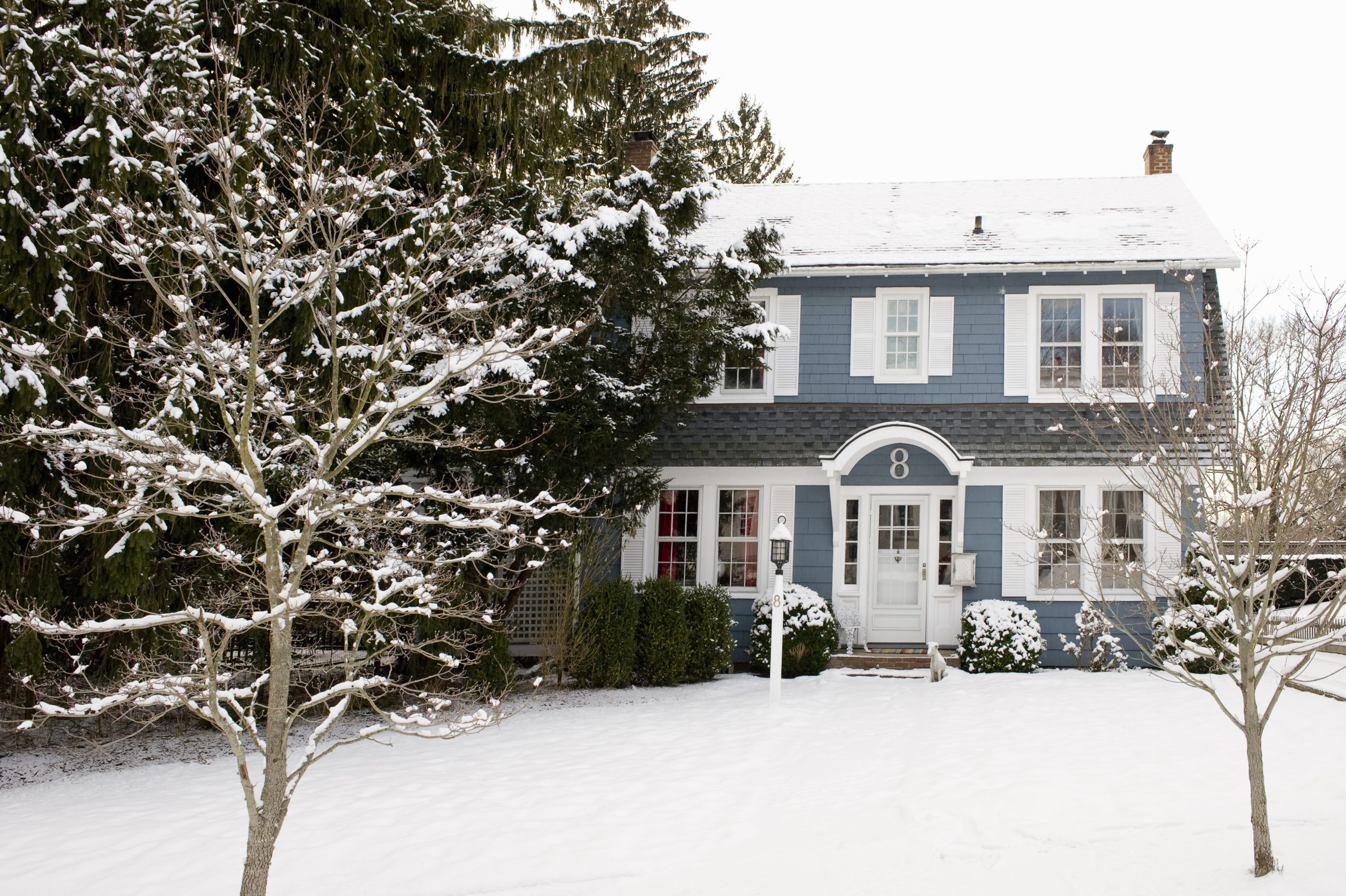
Cold weather is a constant stress on your home, and it’s important to apply a strict maintenance regime to prevent small issues becoming expensive problems.
After a storm has passed, it’s important to make a series of checks to ensure your home has not been compromised and is in good shape to handle the thaw when it arrives.
However, the first check should come before the storm – your insurance.
Do not assume you’re fully covered as standard policies can vary. Many say they protect you from “all perils”, but does it really? Some folks have been caught out, especially when the house floods in a thaw.
The first task after a storm is to check the roofline. Use a roof rake to clear the bottom 3ft of snow from the eaves to prevent ice damming.
The next priority should be ensuring drifting snow hasn’t blocked the vents for the furnace and the water heater. Appliances are programmed to shut down if vents become blocked because of the danger of carbon monoxide poisoning indoors.
Then, check for snow around your gas meter and regulator to ensure they’re accessible and functional.
Once the worst is over, you need to get ready for the thaw, as this presents a different set of challenges.
Your downspouts must take melting water at least 6ft from the foundations. Also, clear the window wells of accumulated snow, as this will prevent water from sitting against basement glass once a thaw sets in.
Don’t forget to clear the snow and ice away from street storm drains near your home so the water can flow away from your property.
Here are the most common issues we see occurring in homes during a cold, snowy winter:
Silent threat – The No.1 issue is ice damming, which occurs when the snow on the upper sections of the roof flows down and refreezes. Over time, it will expand like a glacier and go under shingles and then into the walls and ceiling. When the thaw begins, the nightmare starts.
The fix – Your attic must have proper ventilation – both intake and exhaust vents – to keep the temperature consistent. If you find a build up has occurred, don’t risk life and limb on the roof. Please, call the experts. Also, check the ceiling corners and top of window frames for moisture or staining as these are early signs of a slow-leak ice dam.
Blocked vents – Heavy drifting in sub-zero temperatures is common, and it will block your vents. When that happens, your appliance will probably shut down automatically.
The fix – Walk around the property after every storm and check the vents. If any appliances, such as your furnace, cut out suddenly, then check the vent first rather than assume it has a mechanical issue.
Meltwater ingress – When the snow melts, it will saturate the ground, and then the remaining water will have nowhere to go. The run off may well head for the foundations of your property.
The fix – You have to watch this situation carefully. The best thing to do is have downspouts direct the water away from the property – the further the better. If water consistently gathers near your home, hire a contractor to install drainage pipes to negate the threat.