
The speed at which most of us have embraced the work-from-home movement has been incredible. Society has shifted with such gusto that many are wondering whether we’ll return to the office once the virus is finally conquered, or if this is the new normal.
The impact on our lives and communities will be profound if companies decide it’s cheaper, more efficient and popular with staff to have a remote workforce.
This won’t happen overnight, but it is possible offices will end up being converted into apartments and retailers in the business districts will adapt or disappear.
This change also confronts the residential property market. As an experienced local agent, we are fielding for the first time a consistent line of enquiry related to whether a home has space for a home office and a decent internet connection.
The implementation of the National Broadband Network (NBN) has heightened awareness of the possibilities of working from home on a permanent basis.
Some savvy buyers are prioritising homes with NBN’s “fibre to the curb” service, which is said to provide faster and more reliable speeds than those with “fibre to the node”, a type of connection in which you share data speed with neighbours.
But most are now asking if properties feature a dedicated home office space that will allow them to work from home effectively. If you’re thinking of selling your property, having a home office will give you a distinct advantage over similar properties for sale in your area that do not.
But a word of warning – don’t do it at the expense of a bedroom. These times might be crazy, but buyers aren’t completely mad and still value a home mainly for its position and number of bedrooms.
An alternative to a room conversion is to find a quiet corner of your home that can be a dedicated work space. Sites such as Instagram and Pinterest will give you plenty of inspiration for what you can achieve even in a small space.
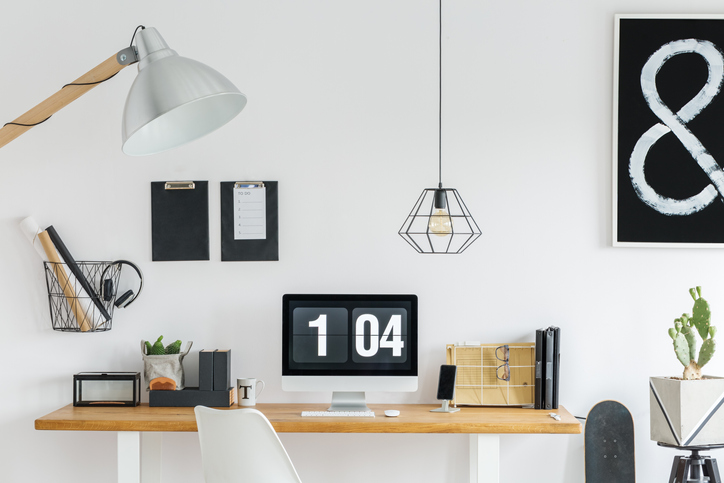
Here are nine of my favourite tips on how to set up a great workspace in your home.
- Find privacy or a quiet corner – You don’t need an entire room, or a city skyline view, to create a home office. But it’s best to choose a space away from the busiest areas of your home.
- Blend in – If space is tight, then select furniture that matches the rest of your home. This will ensure the office doesn’t appear awkward or badly designed.
- Divide and conquer – If you don’t have a separate space to convert into an office, buy a divider so your work doesn’t have a 24×7 presence in your life. Find a screen that you can decorate with fabric that matches the rest of the room.
- Invest in a good desk and chair – Don’t short change yourself on these. Your posture and wellbeing are at stake – and that’s no exaggeration. If your office is offering an ergonomic audit of your set-up, invite them in. Some employers will pay for what you need. Remember, you’ll likely be spending 30 hours or more a week at your desk.
- Avoid clutter – Promise yourself that you’re going to keep the workspace neat and tidy. Invest in cabinets, modular cubes and shelves to achieve this goal. This will ensure work doesn’t spill into the rest of the home.
- Light bulb moment – Position your screen away from any natural light, as this produces glare on your computer screen. The best lighting is directional, such as a desk lamp and overhead halogens that can be dimmed if necessary.
- Crank the Wi-Fi – You’ll need good internet access to cope with the demands of work. If you can’t run a CAT5 or CAT6 cable to your desk, use Wi-Fi extenders to deliver the data speeds you need.
- Order office supplies – Don’t trash your concentration and productivity by making endless trips to the store for pens, paper and printer ink. Stock up and avoid this distraction.
- Consider a second phone – If you’re finding it difficult to achieve a work/life balance, get a second phone – one for your private life and the other for work.